
Blog, Garden Blog, Garden Tips
Bumblebees are vitally important pollinators-What you need to know and how you can help

Mar
Bumblebees are vitally important for pollinating hundreds of plant species, including many crops like tomatoes, peppers, and cranberries,. As generalist foragers, they do not depend on any one flower type. However, some plants do rely on bumblebees to achieve pollination. On many crops, bumblebees (Bombus species) are 2-4 times more effective pollinators per bee than honeybees (Apis mellifera) and solitary bees such as the alfalfa leafcutter (Megachile rotundata). This is due to a 50-200% faster flower working rate and an average of 50 or more % longer hours worked each day.
Bumblebees, like other pollinators, are under threat from the loss and degradation of their habitat due to pressures such as development, agricultural intensification and climate change. The loss of bumblebees can have far-ranging ecological impacts due to their role as pollinators.
Thanks to Pollinator.org for providing information for this post. Check out their full website here: https://www.pollinator.org
Feature photo credit: Bombus borealis queen on clover by Tiffani Harrison
What Are Bumblebees?
Bumblebees known for their large hairy bodies, are important pollinators of wildflowers and crops. Their fuzziness also makes them excellent pollinators as they transport a lot of pollen while foraging. Bumblebees are social bees, capable of forming colonies of hundreds of individuals. There are 46 different species that call North America home. They occupy a wide range of habitats; prairies, meadows, mountainous ranges, savannas, agricultural landscapes, wetlands, and even urbanized areas. Bumblebee colonies rely on blooming flowers from early spring to fall to supply them with their only food, pollen and nectar. In addition to flowers, bumblebees need places to make nests (sheltered spots with insulating material, like abandoned rodent nests or dried grass clumps), as well as places for queens, the only ones to survive the winter, to hibernate (underground, often near wooded areas).
Why Are They Important?
Roughly 26% of our North American bumblebee species are assessed to be at some level of conservation concern, and nearly 20% of the species are too data deficient to be assessed. Several species are vulnerable to extinction and there is the possibility that some species may already be extinct. It is likely that there isn’t a single factor to attribute to bumble bee decline, but rather a combination of factors and stressors. Although some species are at risk, populations of other species appear stable and, in some cases, increasing and expanding their ranges.
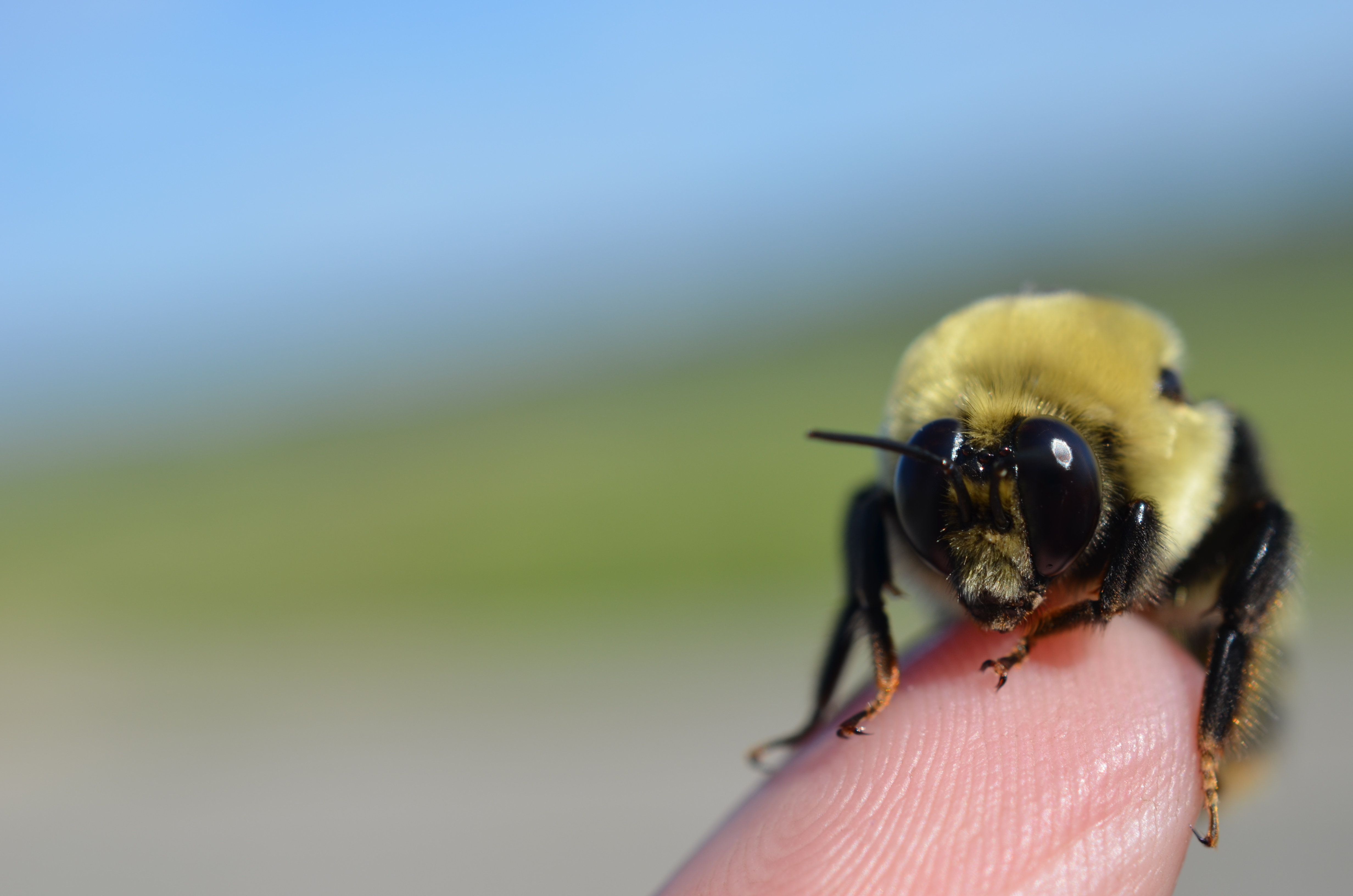
Bombus nevadensis by Tiffani Harrison
How Can You Help?
You can help bumblebees by creating and maintaining habitat to support bumble bees and other pollinators. Bumblebees need a diversity of flowers blooming from early spring through late fall. They also need places to nest and spend the winter. For the greatest benefit, plant a mix of flowering trees, shrubs and herbaceous plants so that something is always blooming. Native plants are a great choice as they are especially nutritious and typically not treated with pesticides.
Creating a wildlife habitat garden in your yard or garden space—or even on your porch or balcony—will help provide food, water, cover, and a place to raise young for the disappearing bumblebees. As even more pressure is put on bumblebees from a variety of factors, such gardens could become critical resources and havens for declining species. If you’d like to plant your garden to attract and benefit bumblebees and other pollinators, check out the information on Pollinator.org at https://www.pollinator.org/gardencards or https://blog.nwf.org/2020/04/how-you-can-help-our-disappearing-bumble-bees/
