Garden Tips
What smart gardeners in Zone 6 are doing right now

May
If your yard suddenly feels like it went from “Spring is finally here!” to “Wow … everything is growing six inches overnight”… welcome to early June in Missouri. Here’s what smart gardeners in our area are doing right now to help their plants thrive.
The first two weeks of June are prime time in Clay County, Platte County, Clinton County, and across the KC Northland. Warm soil, longer days, and occasional rain create ideal growing conditions—but they also create ideal conditions for weeds, fungal issues, stressed lawns, and plants that decide to test your patience.
The good news? A few smart moves now can mean a healthier, more colorful, lower-maintenance landscape all summer long. Read on to find out what smart gardeners are doing now to prepare their plants for the coming summer weather.
Here’s what our Pro Staff at Full Features Landscape and Garden Center in Smithville recommends tackling in the first half of June.
1. Feed Containers, Hanging Baskets & Annual Color Like You Mean It
Your Spring containers have officially entered their “teenage growth spurt” phase. Petunias, calibrachoa, lantana, geraniums, and other flowering annuals are burning through nutrients quickly now.
Early June To-Do:
- Fertilize flowering containers every 7–14 days
- Deadhead spent blooms regularly
- Water deeply rather than lightly
- Rotate containers for even growth
If your baskets are looking less “Pinterest” and more “survival mode,” don’t panic. Most can bounce back quickly with the right care. (And if they can’t? We know a place with fresh annuals that weren’t sitting outside a gas station for three weeks. Stop by our Garden Center today!)
2. Don’t Let Your Lawn Become a Summer Science Experiment
This is the season when lawn care habits start showing results. The biggest mistake we see? Mowing too short. Scalping grass creates stress, weak roots, and opens the door for weeds and disease.
Lawn Rules for Early June:

- Raise mowing height to 3–4 inches
- Water deeply (about 1 inch per week total – we have tools for that)
- Mow with sharp blades
- Spot treat weeds rather than blanket spraying (we have products for that)
If your lawn looks uneven, thin, or patchy, don’t assume more fertilizer is the answer. Different problems need different solutions—and our Pro Staff loves helping diagnose what’s actually happening.
3. Plant Shrubs & Trees Now—But Plant Smart
Early June is still a great planting window for shrubs and trees in Zone 6. The secret isn’t planting. It’s watering correctly afterward.
Newly-Planted Tree Checklist:
✓ Water deeply and slowly
✓ Mulch 2–3 inches (keep away from trunk)
✓ Skip heavy fertilizer at planting
✓ Monitor soil moisture—not just surface dryness
A properly selected tree or shrub should look better in year three than day three. (And yes, variety matters. We carry selections chosen to thrive here—not just survive.) Our Pro Staff can help you determine how much fertilizer to apply at planting, how much mulch you need and how to apply it (see Paragraph 5), as well as how to accurately monitor soil moisture and apply the correct amount of water at the right time. Keeping an eye on the local weather forecast can be helpful in planning your watering schedule.
4. Perennials Need a Little Editing Right Now
Early June is when gardeners realize that some perennials are overachievers. (Looking at you, salvia.) A quick trim now can encourage better blooms and cleaner growth later.
Perennial Maintenance:
- Cut back spent blooms
- Stake tall growers early
- Divide Spring bloomers if needed
- Weed before weeds seed
This is also an excellent time to fill empty landscape spaces with fresh color and texture.
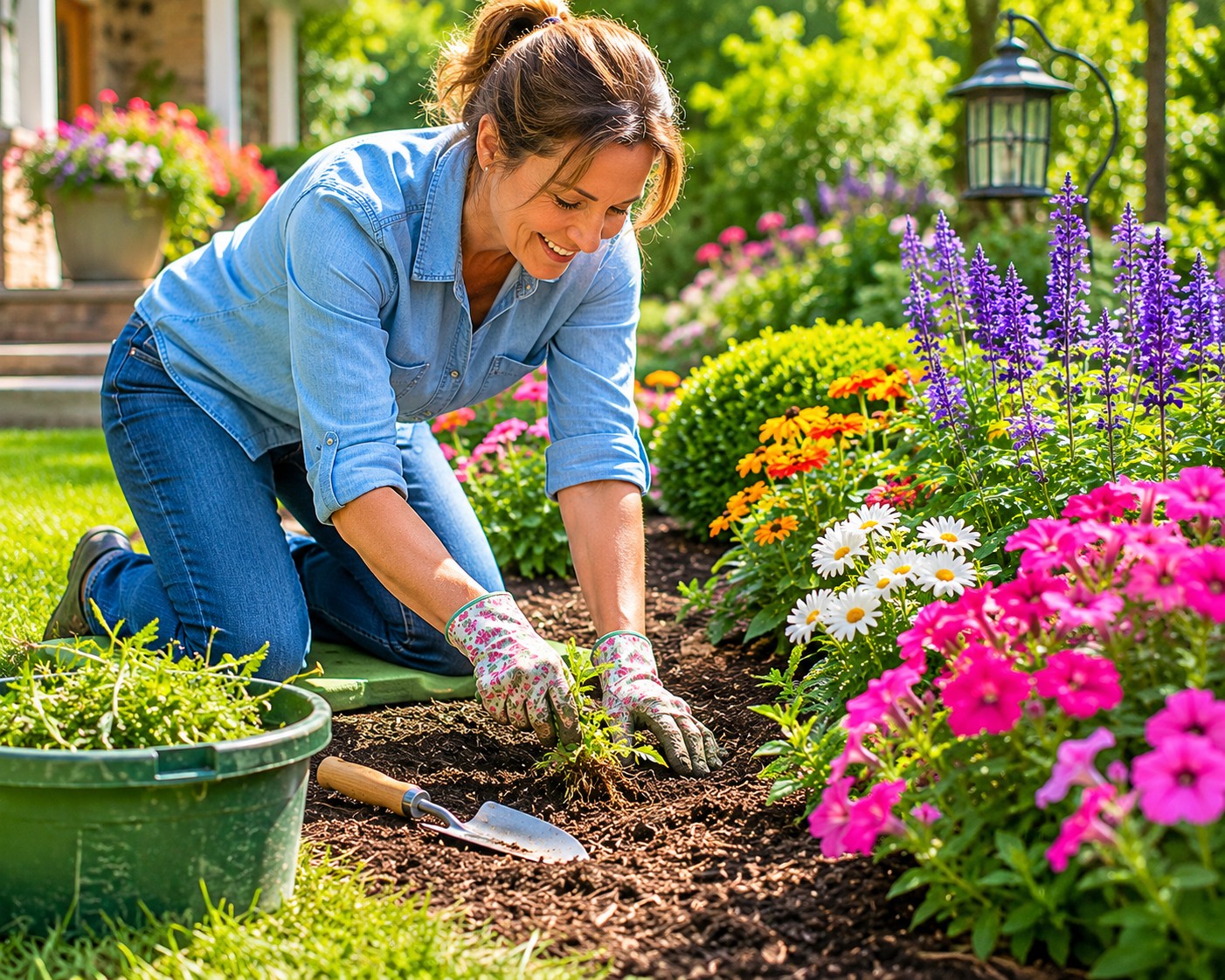
5. Mulch Is Not Decoration. It’s Insurance.
Fresh mulch does more than make beds look tidy. Some of the benefits of properly-applied mulch include:
- Reduces water loss
- Suppresses weeds
- Moderates soil temperature
- Protects root systems
Aim for 2–3 inches—not mulch volcanoes.