
Blog, Garden Blog, Garden Tips
Bring Summer Houseplants Back Indoors: A Fall Checklist for Healthy Plants
Sep
It’s time to start thinking about bringing those houseplants back indoors:
A Fall Checklist for Healthy Plants
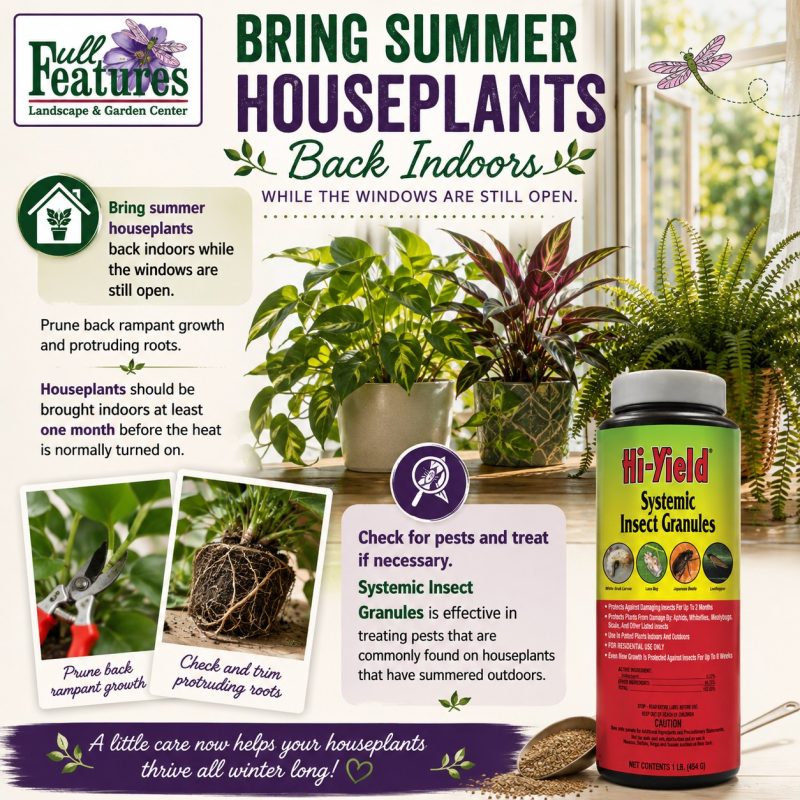
There is something wonderful about giving houseplants a Summer vacation outdoors. The extra light, fresh air and summer humidity can encourage beautiful growth – but eventually, it’s time to bring them home.
And the trick is not waiting until cold night temps set in to think about it.
If your houseplants have spent the summer on the porch, patio, deck or around the garden, early fall is the perfect time to start preparing them for their return indoors.
Most tropical and subtropical houseplants don’t tolerate chilly temperatures well. University Extension guidance generally recommends bringing them inside before temperatures become too cold, with many plants needing protection once nighttime temperatures approach the 40s or 50s. The exact threshold varies by plant.
But temperature isn’t the only thing to think about.
You also don’t want to accidentally bring the outdoor pests inside with them.
That’s where a little preparation now can make a big difference.
1. Don’t Wait Until the Last Minute
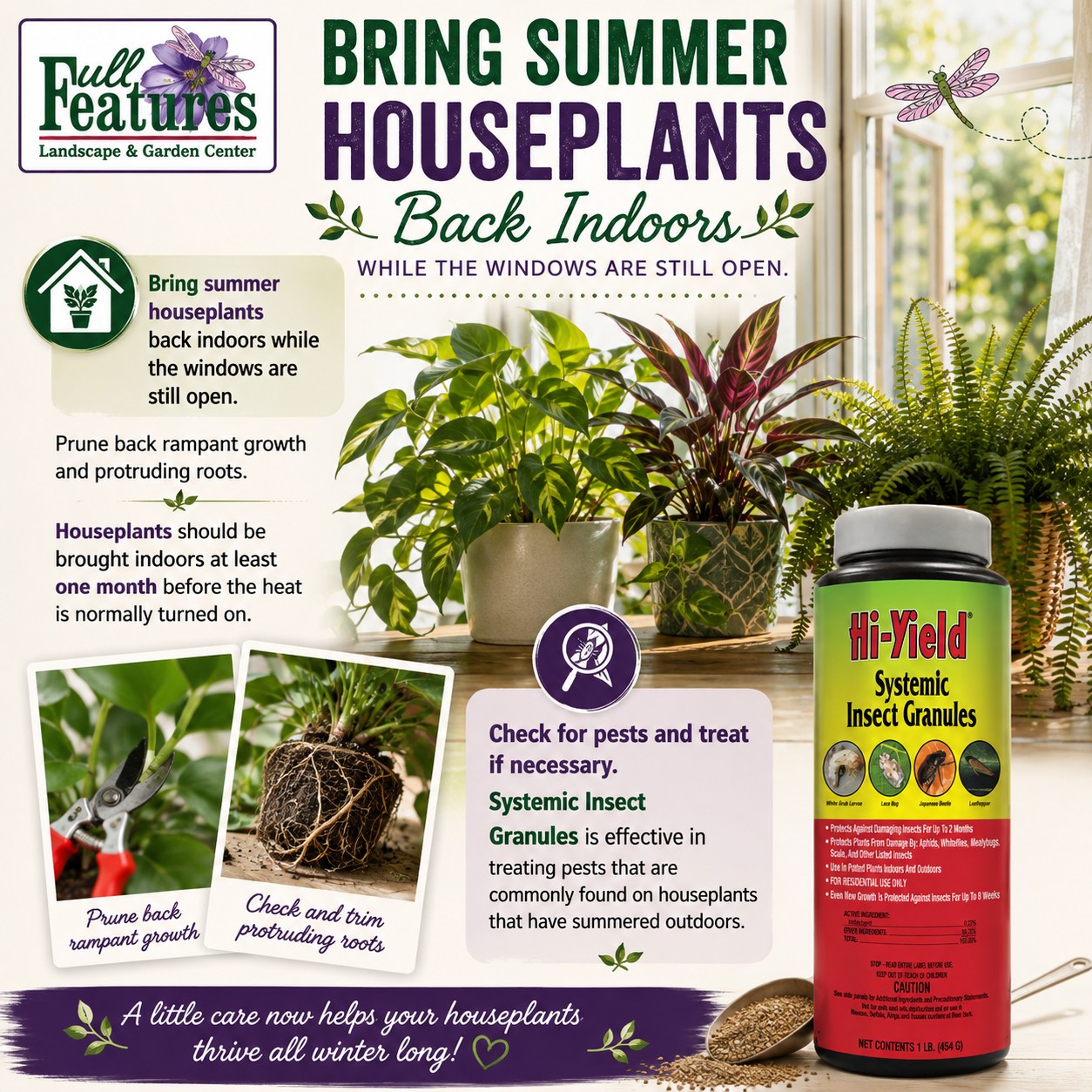
One of the easiest mistakes is waiting until the weather suddenly turns cold. Instead, start the process while the plants are still outside.
This gives you time to:
- Inspect plants carefully
- Remove pests
- Prune excessive growth
- Check containers and roots
- Clean foliage
- Gradually adjust plants to lower light
- Decide which plants are ready to come indoors
University Extension experts recommend beginning preparations as fall temperatures decline and notes that many houseplants should be brought indoors when temperatures begin falling into the 40s–50s.
Think ahead rather than reacting to the first frost.
Give Every Plant a Thorough Inspection
This is probably the most important step.
Before a plant comes inside, look carefully at:
- The tops of the leaves
- The undersides of the leaves
- Stems and leaf joints
- New growth
- The soil surface
- Around the pot rim
- Underneath the container and saucer
Some pests are tiny and easy to overlook.
Watch for:
- Aphids
- Spider mites
- Scale
- Mealybugs
- Whiteflies
- Fungus gnats
- Webbing
- Sticky honeydew
- Chewed or distorted leaves
Extension experts specifically recommend examining plant parts and containers for insects, webbing, holes, eggs and other signs of pest activity before bringing plants indoors.
And there’s a good reason to be thorough.
A small pest population outdoors can become a much bigger problem indoors.
Inside, there are fewer natural controls, and pests can spread from one plant to another.
The Doctor Is In!
This is where our Garden Center Pharmacy — “The Doctor Is In” comes in.
Not sure whether you’re looking at:
- Spider mites?
- Scale?
- Aphids?
- A fungal problem?
- Sun damage?
- Nutrient deficiency?
- Something else entirely?
Don’t guess.
Take a few clear photos of the problem areas and bring them in, or bring a small plant sample when appropriate. Our team can help you identify what you’re seeing and point you in the right direction for treatment and ongoing care.
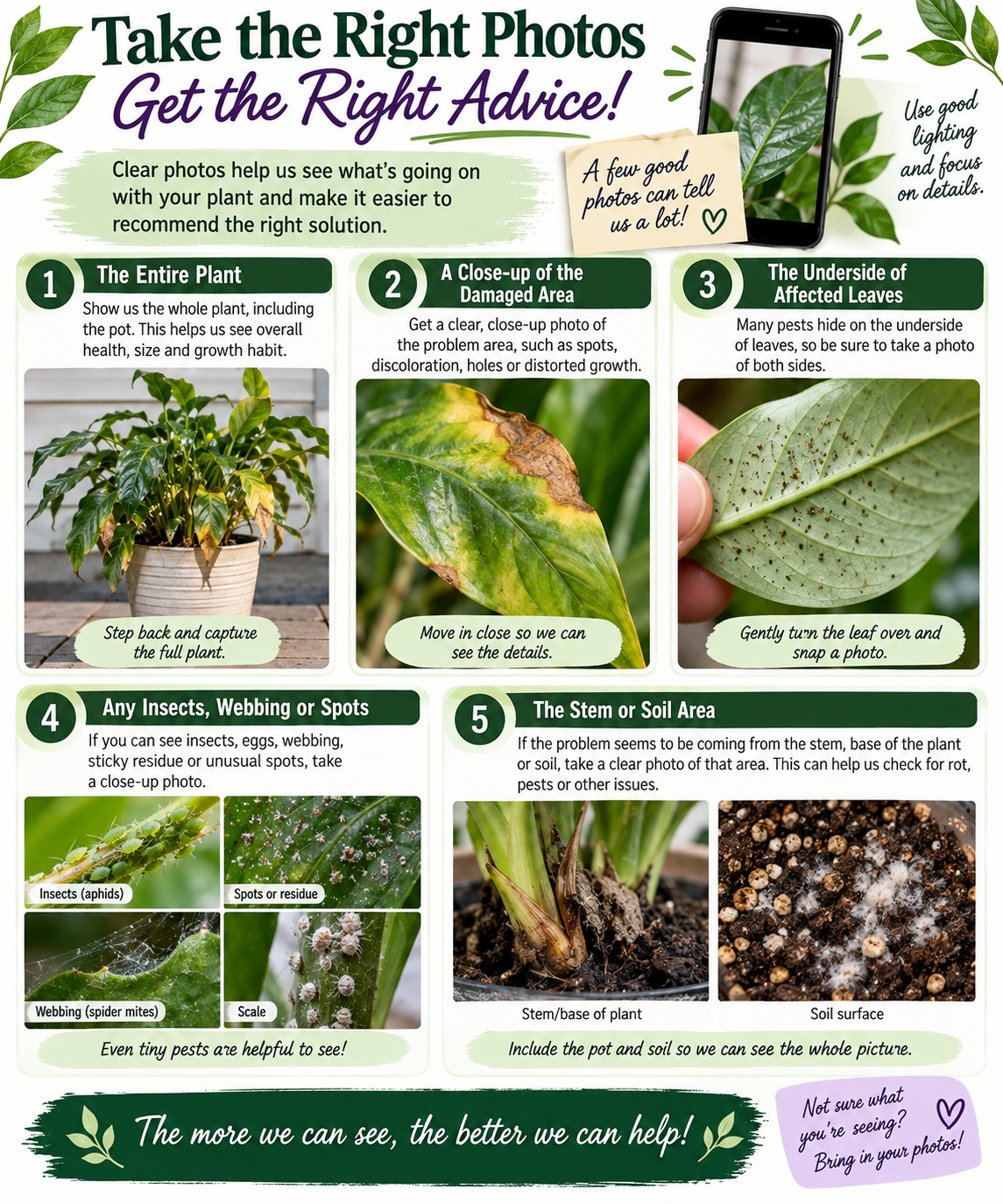
A good diagnostic photo should show:
- The entire plant
- A close-up of the damaged area
- The underside of affected leaves
- Any insects, webbing or spots
- The stem or soil area if the problem appears to originate there
Sometimes one good close-up tells us more than a description of what you think is wrong.
The Doctor Is In — and we’d rather help you identify the problem before it moves into your living room!
Prune Back Excessive Growth
Summer can be very good to houseplants. Sometimes too good. A plant that was compact in May may be sprawling by September.
Before bringing it indoors, look for:
- Long, weak or awkward growth
- Broken branches
- Dead leaves
- Damaged foliage
- Growth that simply won’t fit comfortably in its indoor location
A little pruning can make the transition easier, and the right tools can make pruning easier. Visit our Garden Center for pruning aids such as hand tools and gloves. We also offer a wide selection of pots, potting soil, organic potting soil, and soil amendments to make your houseplants happy.
Your goal isn’t necessarily to give the plant a drastic haircut. Instead, think cleanup and practicality. And remember that different houseplants respond differently to pruning, so avoid automatically treating every plant the same way.
Check the Roots and Container
Take a look underneath the pot.
Are roots coming through the drainage holes?
Is the plant severely root-bound?
Has the plant become unstable or top-heavy?
Does the container need cleaning?
This is a good time to make a decision.
Some plants may benefit from repotting, while others are better left in their existing container until Spring.
Illinois University Extension notes that repotting into fresh potting mix can sometimes be useful before returning plants indoors, particularly when dealing with certain pest problems. (Illinois Extension)
Don’t automatically repot every plant just because Fall has arrived.
If the plant is healthy and the container is adequate, there may be no reason to disturb it right before Winter.
Give the Foliage a Cleaning
Outdoor plants collect dust, pollen and other debris. A gentle rinse can help clean the foliage and may knock some pests from the plant. Pay particular attention to the undersides of leaves.
For plants that can tolerate it, a good spray of water can be a useful first step before reaching for a pesticide. Illinois Extension recommends washing pests from foliage as one approach to managing some common houseplant pests. (Illinois Extension)
And remember: not every plant problem requires a pesticide.
Whenever possible, start with inspection, sanitation, pruning, isolation and other appropriate cultural or mechanical controls.
If a pesticide is needed, read the entire label and make sure the product is labeled for the intended plant, pest and use. EPA emphasizes following pesticide labels and directions exactly. (US EPA)
Start Moving Plants Toward Lower Light
Here’s something easy to forget: Your plant may have spent the entire summer in bright outdoor light. Then suddenly you move it into a living room. That’s a big environmental change.
One way to make the transition easier is to gradually move plants from bright outdoor conditions toward a shadier location before bringing them indoors. Illinois Extension recommends gradually reducing light levels before plants return inside, while other Extension guidance similarly recommends acclimating plants to the lower-light indoor environment. (Illinois Extension)
You may still see some yellowing or leaf drop after the move.
Don’t panic. A change in light, temperature, humidity and watering can cause temporary stress as plants adjust.
Adjust Your Watering
Your plant’s watering needs will probably change once it comes indoors.
Outdoor containers can dry surprisingly quickly because of sun, wind, heat and active growth. Indoors, light levels and growth rates are generally lower. That means the plant may not use water as quickly.
Don’t continue watering on the same schedule you used outside. Check the soil and the plant’s actual needs instead. Illinois Extension recommends bringing plants in on the drier side and watering more carefully as they adjust to lower indoor light. (Illinois Extension)
Consider a Short Quarantine
If you have a collection of houseplants, this step is worth considering.
Rather than immediately putting returning plants shoulder-to-shoulder with your indoor collection, keep them separated for a while and continue watching for pests. Extension experts recommend quarantining returning plants from other indoor plants for a period of time to reduce the risk of spreading insects or disease. This can be especially helpful if you’ve brought several plants in from different outdoor locations.
One pesty plant can become everybody’s problem surprisingly quickly.
Don’t Forget the Soil
The leaves aren’t the only place pests can hide.
Check around:
- The soil surface
- Drainage holes
- Pot rims
- Saucers
- The underside of containers
Some insects and other small organisms may be associated with the soil or container. If you’re seeing a pest problem, don’t assume the foliage tells the whole story.
Give Your Plants Their Best Indoor Location
Once your plants come inside, think about light first. A plant that thrived in bright outdoor conditions may need your brightest available indoor location.
Watch for:
- Cold drafts
- Hot air from heating vents
- Extremely dry locations
- Sudden temperature changes
- Dark corners
And don’t assume that every houseplant wants a sunny south-facing window. Different plants have different light requirements.
Match the plant to the location whenever possible.
The Full Features Houseplant Checkup
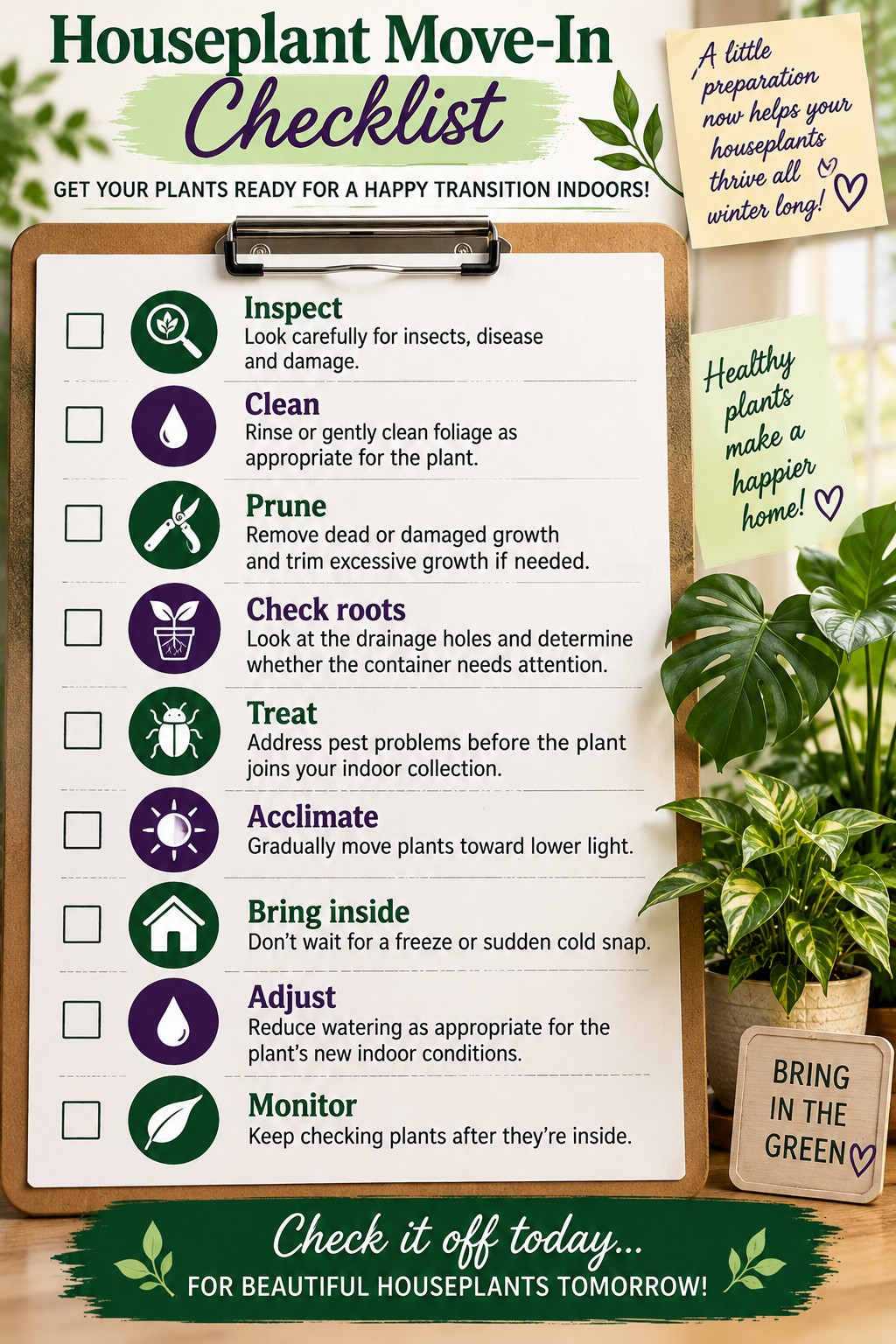
Before bringing a Summer houseplant indoors, run through the following checklist.
And Remember: The Doctor Is In
Your houseplants don’t come with a medical chart. Sometimes you’re left looking at a yellow leaf thinking:
“What happened?”
That’s where we can help.
At Full Features Landscape & Garden Center, our Garden Center Pharmacy – “The Doctor Is In” – is designed to help you figure out what’s going on with your plants.
If you’re not sure what you’re seeing, take a few photos or bring in a small sample when appropriate.
We’ll help you identify the problem and steer you in the right direction for keeping your plants healthy and beautiful.
Because early identification can save a lot of frustration – and sometimes save the plant, too.
A Little Care Now = Happier Houseplants Later
Moving your houseplants indoors doesn’t have to be a frantic September chore.
Start early.
Inspect carefully.
Clean them up.
Deal with pests before they become indoor pests.
Give plants time to adjust.
And don’t hesitate to ask for help when something doesn’t look right.
A little care now helps your houseplants thrive all winter long.
Some images are AI-generated.
