
Blog, Garden Blog, Garden Tips
How to Prepare Lavender, Rudbeckia & Daylilies for Winter
Sep
Fall doesn’t mean it’s time to cut everything back. In this post, we’ll explain how to prepare your lavender, rudbeckia and daylilies for winter in Zone 6.
As summer fades and cooler temperatures arrive, gardeners naturally start thinking about putting the garden to bed for winter. But before you grab your pruners and start cutting everything to the ground, take a closer look.
Different perennials have different Winter needs.
For lavender, Rudbeckia and daylilies, knowing what to cut, what to leave, and when to do it can make a difference in how your garden looks this Winter—and how it performs next Spring.
Here’s a simple Zone 6 guide to help you prepare these popular perennials for the cold months ahead.
Lavender: Resist the Urge to Cut It Back
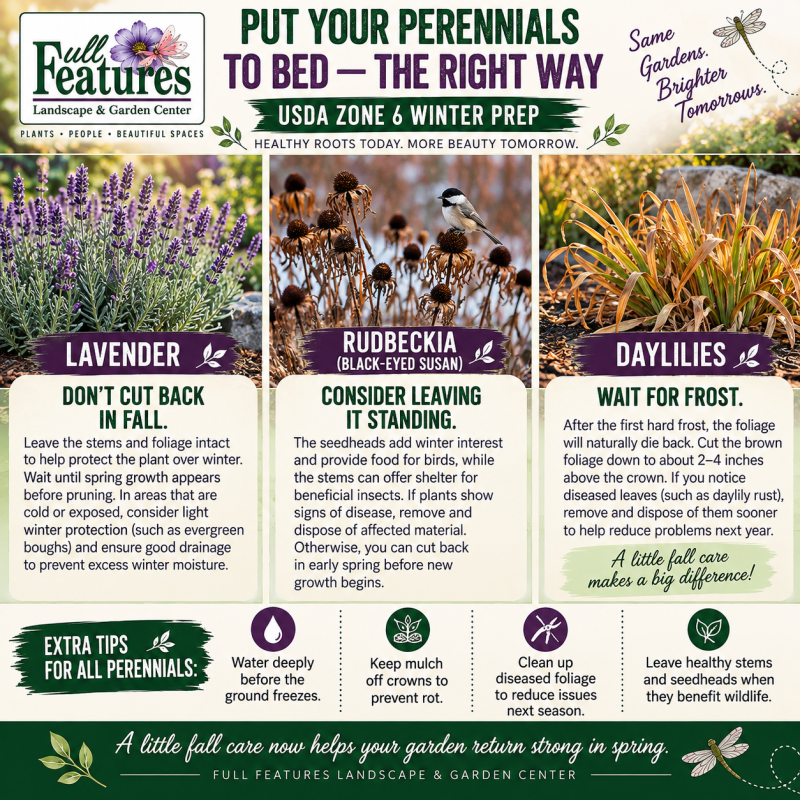
Lavender can be one of the trickier plants to overwinter successfully in areas with cold winters and wet conditions. One of the most important things you can do in fall is avoid heavy pruning.
The University of Illinois Extension recommends waiting until Spring – when new growth appears – before pruning lavender. Cutting into older, leafless wood can result in poor regrowth. (Illinois Extension)
What should you do instead?
Leave healthy lavender stems and foliage in place over winter.
Good drainage is particularly important. Lavender dislikes wet feet, and excessive moisture around the crown can contribute to Winter problems. (Illinois Extension)
If your lavender is planted in a heavy or poorly drained location, Fall is a good time to make a note to improve the site or consider a better-drained location for future plants.
What about Winter protection?
In colder areas, lavender may benefit from a loose winter covering such as evergreen boughs or straw after the plant has gone fully dormant and the ground has initially frozen. Avoid smothering the crown with wet, compacted material. (Illinois Extension)
And remember that not all lavender varieties have the same winter hardiness.
English lavender varieties such as ‘Munstead’ and ‘Hidcote’ have demonstrated good Winter performance in some Midwest locations, while more tender types may struggle in cold climates. (MU Extension)
The takeaway: Leave lavender alone in Fall, focus on drainage and Winter protection where appropriate, and do your main pruning when new growth begins in Spring.
Rudbeckia: Let Those Seedheads Stand
Black-eyed Susans and other Rudbeckia are some of the easiest perennials to prepare for winter. And you may not need to prepare them much at all!
Those dried flower heads that remain after blooming can provide Winter interest and food for birds, while standing stems can provide shelter for beneficial insects. (Illinois Extension)
Consider leaving Rudbeckia standing
Instead of cutting your plants down immediately in Fall, let the seed heads remain through Winter.
You’ll get:
- Winter texture and interest
- Seeds for birds
- Habitat for beneficial insects
- A more natural-looking Winter garden
You can cut the plants back in late Winter or early Spring, before new growth gets underway.
When should you clean them up in Fall?
There is one important exception:
If the plant has significant disease or pest problems, remove the affected plant material rather than leaving it in the garden.
Diseased foliage and debris can harbor organisms that may cause problems the following season. Extension recommendations generally favor removing seriously diseased or insect-infested material rather than leaving it in place. (Illinois Extension)
Daylilies: Wait for the Foliage to Die Back
Daylilies are wonderfully tough plants, but their foliage often looks pretty rough by the end of the growing season. Don’t be too quick to cut it while it’s still green.
Green foliage is still producing energy that the plant stores for next year’s growth. Illinois Extension recommends allowing daylily foliage to naturally begin dying down before removing it. (Illinois Extension)
So when should you cut them?
Once the foliage has turned brown and the plant has gone dormant—often following a hard frost—you can clean up the foliage. Cut the dead foliage back to a few inches above the crown, rather than cutting directly into the crown.
Another option is to leave some foliage until late Winter or early Spring and clean it up before new growth begins.
What if your daylilies had disease?
That’s a different situation.
If your plants experienced significant leaf disease, removing and disposing of affected foliage at the end of the season can help reduce disease problems the following year. Penn State Extension specifically recommends removing infected daylily foliage and disposing of it rather than leaving it in the garden. (Penn State Extension)
Don’t Forget to Water
Fall preparation isn’t just about pruning.
Water matters, too.
If autumn is dry, continue watering your perennial beds as needed until the ground begins to freeze. This is particularly important for newly-planted perennials, which haven’t yet developed extensive root systems.
Penn State’s perennial-care guidance includes watering as needed through September and winterizing after the ground freezes later in the season. (Penn State Extension)
A good deep watering before the ground freezes can help plants enter Winter with adequate moisture.
Mulch—But Don’t Smother the Crown
A layer of mulch can help moderate soil temperatures and reduce the effects of repeated freezing and thawing. But there’s an important distinction between mulching the root zone and piling mulch directly against the plant crown.
Keep mulch from touching the crown or stems.
For established perennials, a few inches of appropriate organic mulch can provide useful insulation once the soil has begun to cool. (MU Extension)
And resist the temptation to create a giant mound of mulch around every plant. More isn’t necessarily better.
You Don’t Have to Have a Perfectly Tidy Winter Garden
One of the nicest changes in modern gardening is a growing appreciation for leaving some plants standing through winter.
A completely cleared garden may look tidy, but standing stems and seedheads can provide:
- Food for birds
- Shelter for insects
- Winter interest
- Structure in the landscape
- Additional protection around plant crowns
University Extension recommendations increasingly encourage gardeners to leave selected healthy perennial stems and seedheads standing rather than automatically cutting everything down in fall. (Illinois Extension)
So don’t feel guilty about leaving a few “messy” plants in your garden.
That mess may be doing some very important work.
Your Zone 6 Winter-Prep Checklist
Before winter arrives, take a walk through your perennial garden.
Lavender
☐ Don’t cut it back heavily in fall
☐ Check that drainage is good
☐ Leave healthy stems and foliage intact
☐ Consider winter protection in exposed or particularly cold locations
☐ Plan spring pruning when new growth appears
Rudbeckia
☐ Consider leaving healthy plants standing
☐ Leave seedheads for birds and winter interest
☐ Remove significantly diseased material
☐ Plan spring cleanup before new growth begins 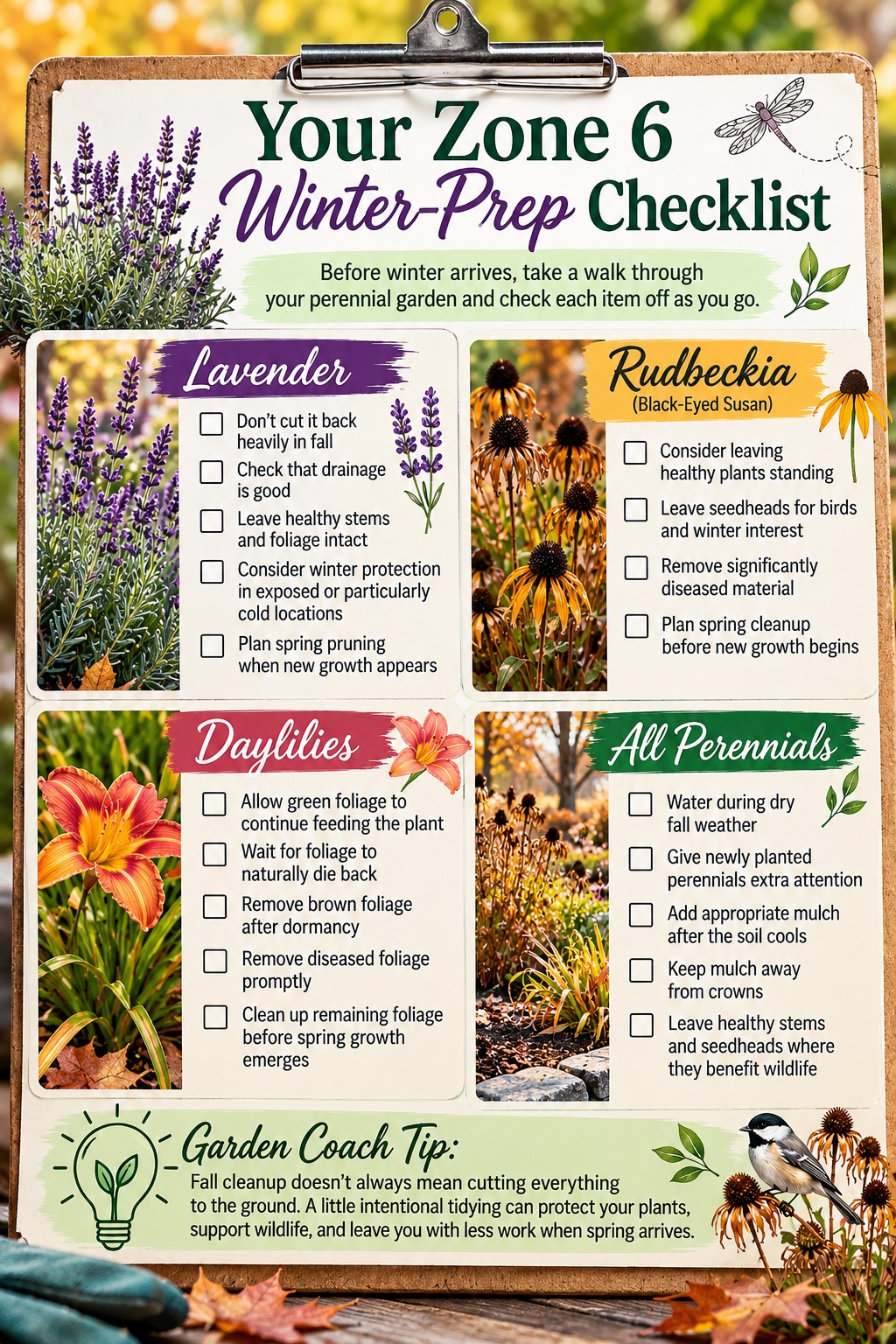
Daylilies
☐ Allow green foliage to continue feeding the plant
☐ Wait for foliage to naturally die back
☐ Remove brown foliage after dormancy
☐ Remove diseased foliage promptly
☐ Clean up remaining foliage before spring growth emerges
All Perennials
☐ Water during dry fall weather
☐ Give newly planted perennials extra attention
☐ Add appropriate mulch after the soil cools
☐ Keep mulch away from crowns
☐ Leave healthy stems and seedheads where they benefit wildlife
A Little Fall Care Goes a Long Way
Preparing your perennial garden for Winter doesn’t have to mean hours of cutting, hauling and cleanup. Sometimes the best thing you can do is leave a healthy plant alone.
Give your lavender good drainage and leave it intact. Let Rudbeckia provide food and shelter through winter. Allow daylily foliage to finish its job before cleaning it up.
And when you’re unsure what a particular perennial needs, ask before you cut.
Stop by Full Features Landscape & Garden Center with your questions. We’re happy to help you determine what should be cut back, what can be left standing, and what your garden needs to make it through winter ready for another beautiful growing season.
A little Fall care now can make for a stronger, healthier garden next Spring.
Infographics are AI-assisted artwork created for Full Features.
